Lockheed Martin Reports Strong Q2 2026 Results as Record $230 Billion Backlog Signals Long-Term Defense Growth
Lockheed Martin Reports 11% Sales Growth in Q2 2026
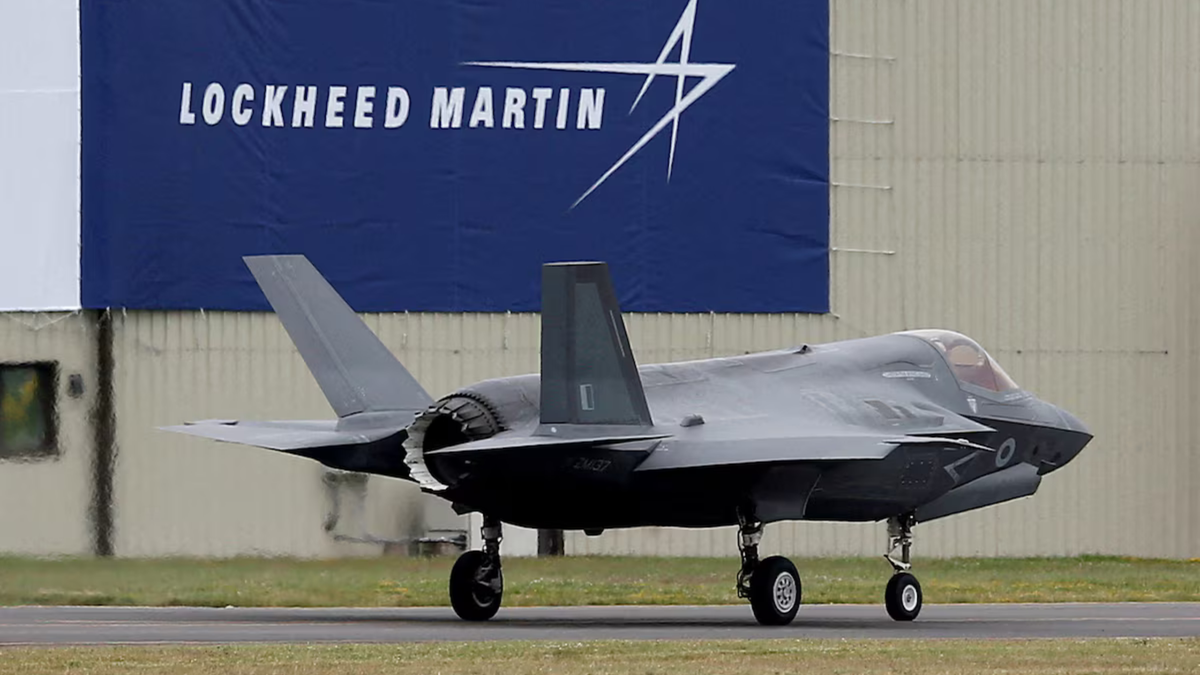
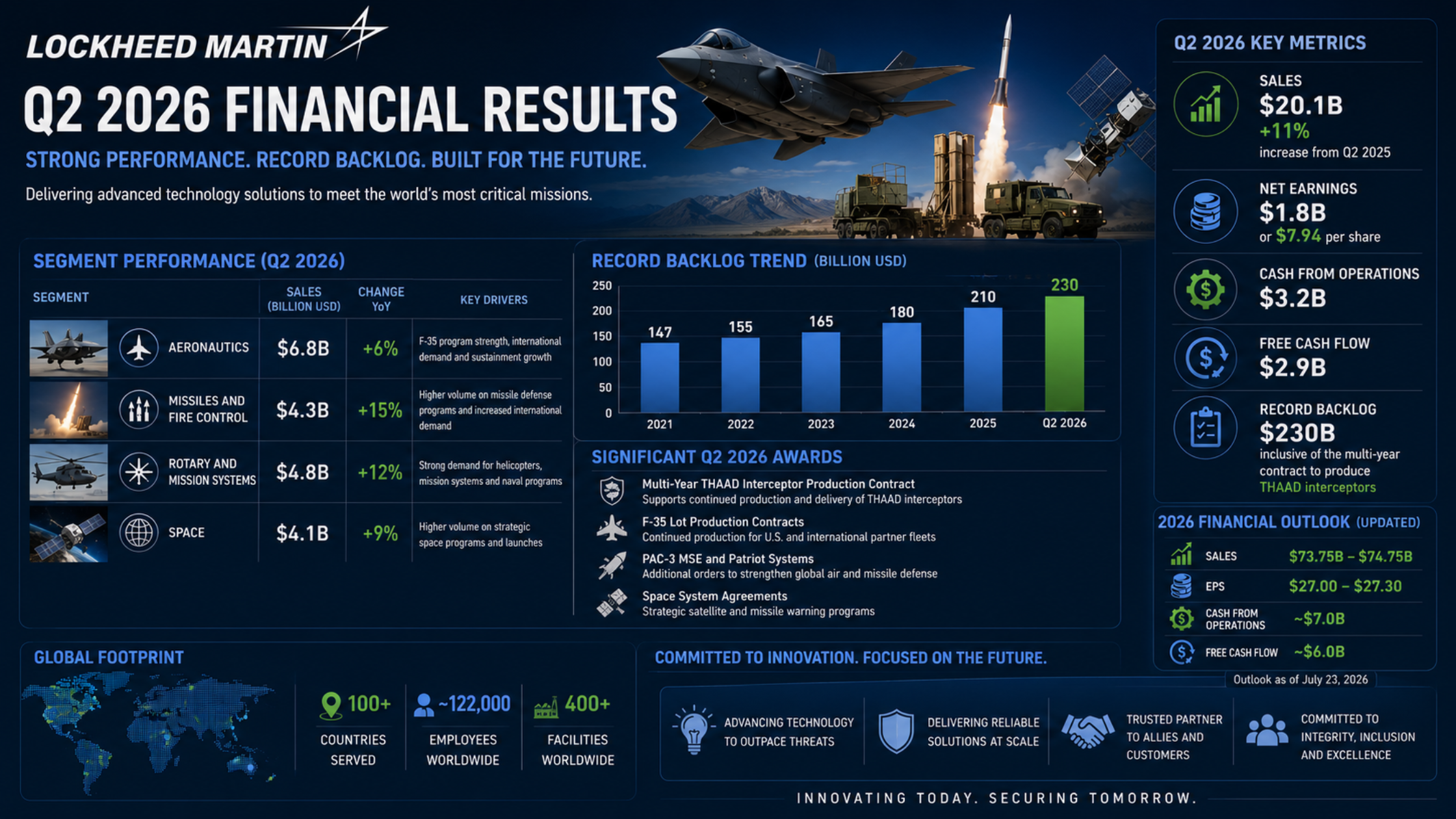
Lockheed Martin reported a strong second quarter of 2026, driven by rising global demand for missile defense systems, advanced combat aircraft, and strategic military technologies. The company announced sales of $20.1 billion, representing an 11% increase compared with the same quarter last year. Lockheed Martin also recorded net earnings of $1.8 billion, or $7.94 per diluted share, reflecting continued growth across its defense portfolio.
The company generated $3.2 billion in cash from operations and $2.9 billion in free cash flow, demonstrating strong financial performance while continuing to invest in expanding manufacturing capacity for key defense programs.
Record $230 Billion Backlog Strengthens Long-Term Outlook
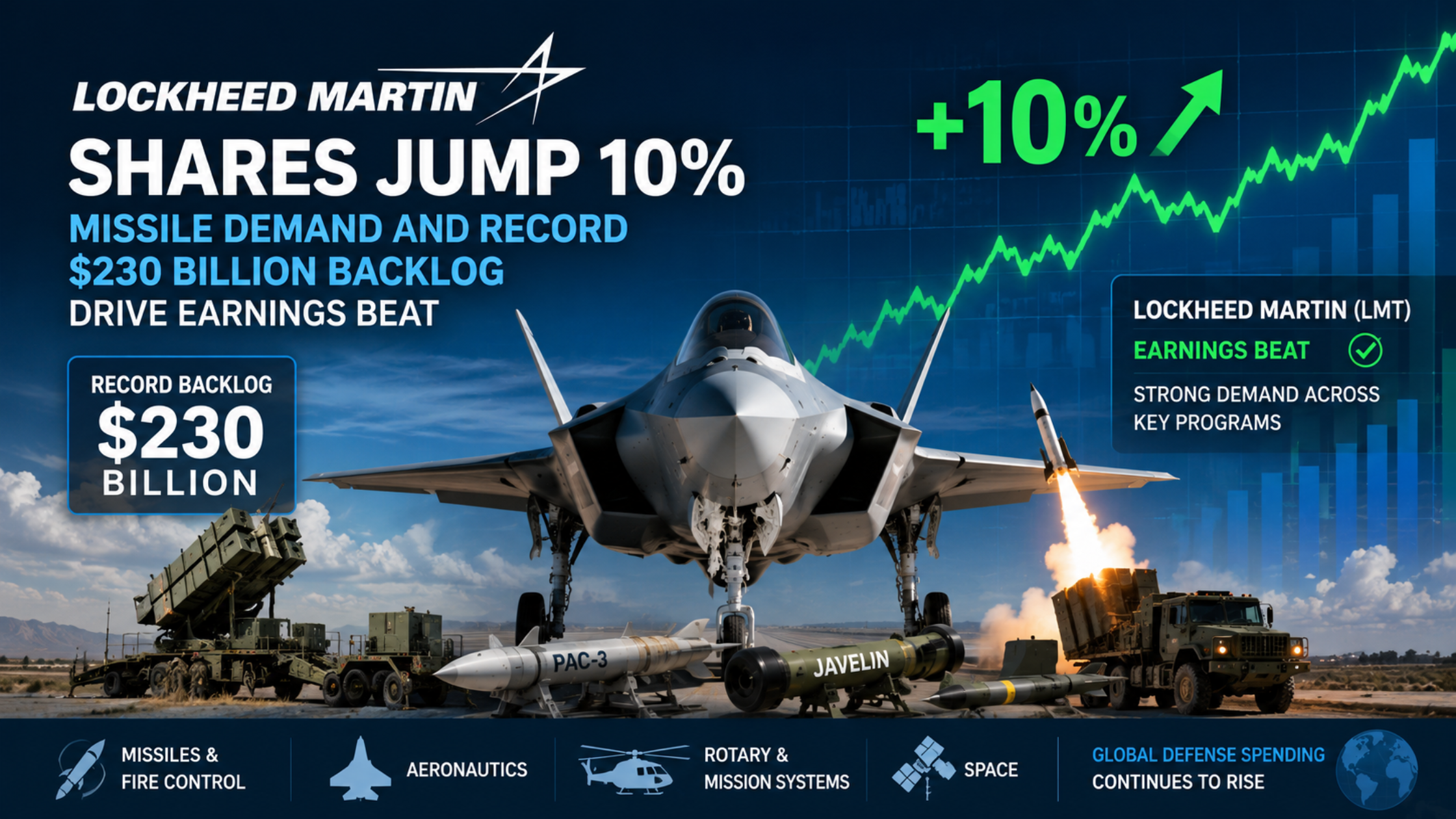
One of the biggest highlights of the earnings report was Lockheed Martin's record backlog of $230 billion, the largest in the company's history. The backlog includes recently awarded long-term contracts across multiple business segments, including the multi-year production contract for THAAD (Terminal High Altitude Area Defense) interceptors.
A backlog represents signed customer contracts that have not yet been completed, providing visibility into future production and revenue. The record order book reflects increasing investments by the United States and allied nations in missile defense, precision-guided weapons, fifth-generation fighter aircraft, and advanced space capabilities.
Missile Defense Programs Continue to Drive Growth
Growing demand for integrated air and missile defense remains one of Lockheed Martin's strongest business drivers. Programs such as the THAAD missile defense system, Patriot PAC-3 interceptors, Javelin anti-tank missile, HIMARS, and the recently unveiled PAC-3 Adapted Capability Effector (PAC-3 ACE) continue to receive strong interest from international customers seeking to modernize their defense capabilities.
The company also highlighted ongoing investments in production capacity to meet increasing global demand, particularly as governments replenish missile inventories and strengthen national air defense networks in response to evolving security challenges.
Author: Kevin Macmellon