USAF Should Buy Newly Designed Air Refuelers to Meet China Threat: Report

The United States Air Force needs to think about designing a new aerial refueling aircraft in view of the increasing threats from China, says a recent report by the Hudson Institute.
The report, entitled Resilient Reach: Redesigning Aerial Refueling for Contested Global Operations, suggests that the tankers used by the Air Force might find it difficult to facilitate any extensive air missions over the Indo-Pacific region if the forward bases are attacked. Hudson Institute
KC-46 Pegasus May Not Meet Future Indo-Pacific Needs
The USAF will slowly be upgrading its fleet of older KC-135 Stratotankers by replacing them with Boeing KC-46 Pegasus tankers. However, according to the report released by the Hudson Institute, the range, fuel offloading capability, and the survivability of the aircraft may not be enough for the aircraft to operate effectively during a war with China.
Tankers may be required to fly from further away from battle zones if airfields in closer proximity come under attack from missiles. Breaking Defense
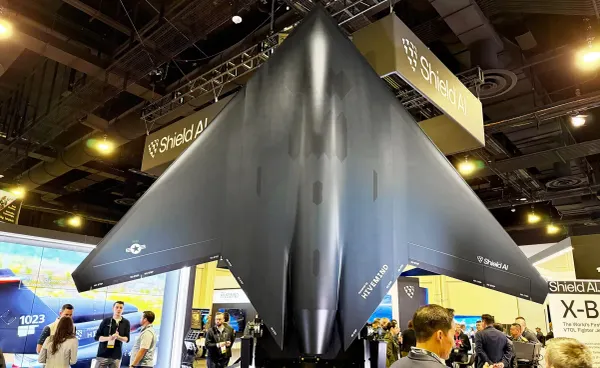
Report Calls for a New Blended-Wing-Body Tanker
It is recommended that a mid-size blended wing body (BWB) tanker be developed with a capability of carrying a lot of fuel for extended distance. From the calculations in the report, it is indicated that the combined fleets of 250 BWB tankers and 260 KC-46s will be able to offer more refueling capacity compared to the 510 KC-46s fleet.
The estimated savings are about $15.5 billion over 30 years from the total expenditure on the two fleets of planes. These are the estimated figures from the report, not the actual Air Force procurement plan. Hudson Institute
Additional KC-46 Orders Could Be Limited
According to earlier plans, the Air Force was going to buy as many as 75 more KC-46s while looking into possibilities for its replacement. Timothy Walton from the Hudson Institute suggested that the additional purchase was to be considered as an absolute upper limit while the service concentrated on developing its new design of the aircraft.
In addition to that, it is proposed to equip the current tankers with advanced communication, mission system, and self-defense technologies. Breaking Defense
Resilient Airfields Are Also a Priority
The study stresses that in the coming years, any tanker missions will have to take into account not only how tankers are designed but also how airfields can be protected against attack and sustained.
It recommends enhancing protection of airfields, dispersing fuel, and developing an infrastructure that makes the tanker mission less vulnerable. The authors believe that by deploying a longer-range fleet of tankers together with more secure airbases, the U.S. can retain its air superiority over the Pacific. Hudson Institute
Author: Kevin Macmellon