Russian Attack on Zaporizhzhia Kills 20 as Trump Eases Diesel Sanctions on Moscow
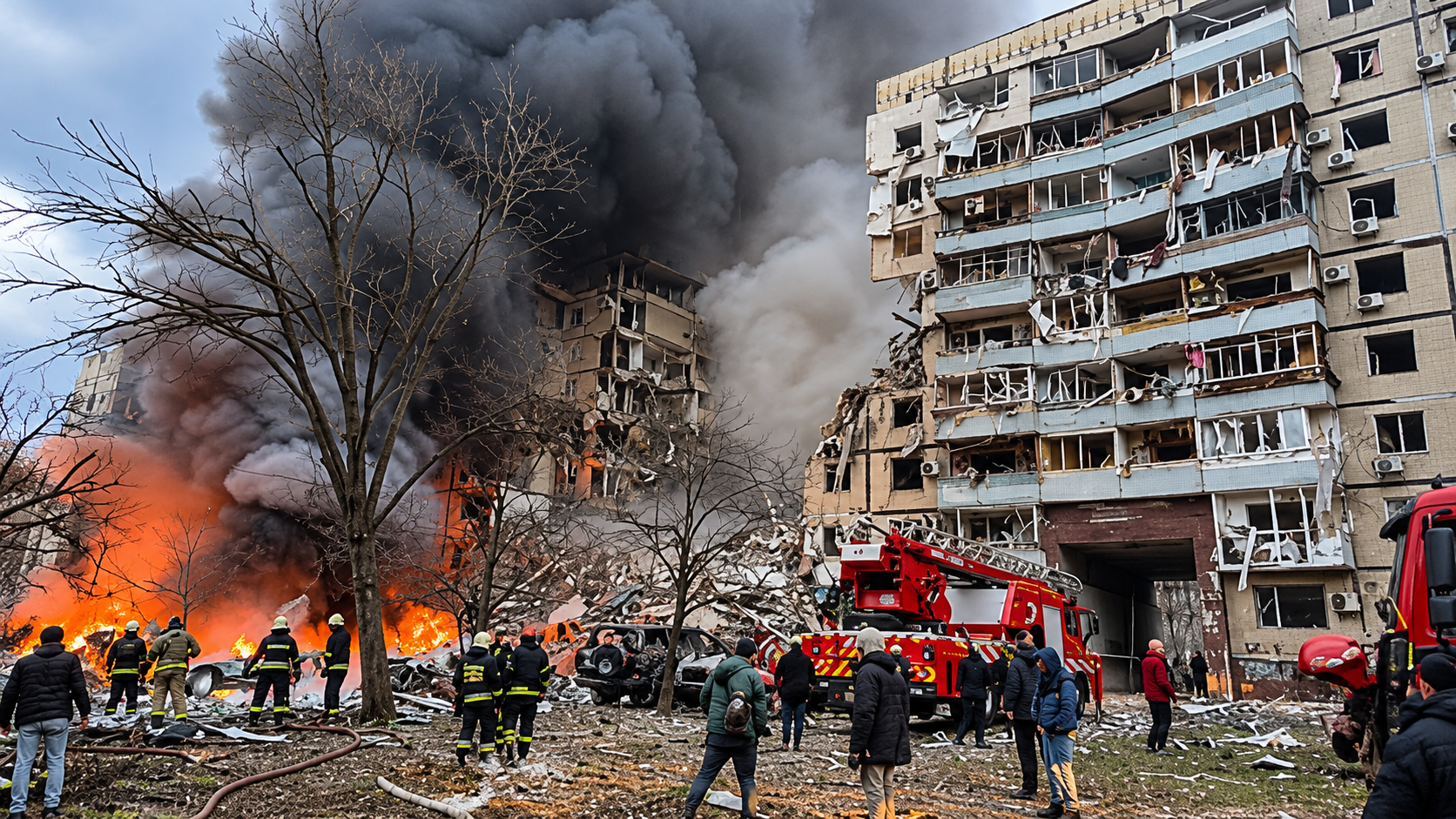
Russian attack on the southern Ukrainian city of Zaporizhzhia killed 20 people, including three children, and wounded 18 others on October 10, 2026, according to Ukrainian officials cited by Reuters. The strike hit residential buildings, leaving parts of an apartment block in ruins as emergency crews searched through the debris for survivors.
The attack came a day after U.S. President Donald Trump announced an agreement involving Russian diesel supplies and a temporary easing of sanctions on Russian fuel exports. The timing has intensified criticism from Kyiv as Washington pursues efforts to address rising fuel prices while seeking a path toward ending Russia’s war against Ukraine.
Residential Buildings Hit in Zaporizhzhia
According to Reuters, Russian forces struck several locations in Zaporizhzhia during the early hours of Saturday. Five glide bombs hit residential buildings, and the resulting damage left rescuers working through collapsed masonry to reach trapped residents.
Among those killed was a six-year-old girl, Reuters reported. Eighteen people were wounded in the attack on the industrial city, which had a prewar population of more than 700,000. Parts of the city lie less than 30 kilometres from the front line.
The strike was the third major mass-casualty attack in Ukraine that week. Reuters reported that attacks on Kramatorsk and Pryluky on Wednesday and Thursday had killed dozens of civilians, adding to the mounting toll from Russia’s bombardment of Ukrainian cities.
Zelenskyy Criticizes Washington’s Diesel Decision
Ukrainian President Volodymyr Zelenskyy sharply criticized the easing of sanctions, arguing that reducing economic pressure on Moscow could weaken incentives for Russia to stop fighting. He linked the policy announcement to the subsequent attack on Zaporizhzhia, although the timing alone does not establish that the sanctions decision caused or encouraged the strike.
The disagreement highlights a central tension in U.S. policy: Washington is attempting to reduce fuel costs while Kyiv wants stronger economic pressure on Russia to force meaningful negotiations.
In a separate report published on October 9, Reuters detailed Trump’s announcement that Russia would supply diesel to the United States and global markets. Trump said the initial supply would exceed 300,000 metric tons, with additional shipments planned. The administration’s move included a temporary easing of sanctions to facilitate Russian fuel exports.
Why the United States Is Easing Diesel Sanctions
The decision comes as fuel prices have risen sharply amid supply disruptions associated with the U.S.-Israeli war with Iran. Diesel is particularly important to trucking, agriculture, and other industries that depend on heavy transport and machinery. Higher prices can feed into the cost of moving goods and producing food, putting additional pressure on consumers and businesses.
Trump has presented additional fuel supplies as a way to bring prices down. However, the effect of the Russian deal remains uncertain. The volume that reaches the market, the timing of deliveries, and broader conditions in global energy markets will influence whether the arrangement produces sustained price relief.
Further Attacks Reported Across Ukraine
The violence extended beyond Zaporizhzhia. Reuters reported that Russian drones flew over Kyiv during a major wave of attacks, while parts of the capital and the surrounding region lost power. The disruption halted metro services for the second time that week.
Russia’s Defence Ministry said its drones had struck a data-processing centre in Kyiv and a cargo ship carrying military supplies to Odesa. Those statements were attributed to the Russian ministry and should be distinguished from independently verified details of damage and casualties.
Diplomatic Efforts Face Renewed Strain
The Zaporizhzhia attack underscores the difficulty of advancing diplomatic efforts while large-scale strikes continue. Ukraine has called for stronger pressure on Russia, while the Trump administration is also responding to domestic concerns over energy prices.
The consequences of the diesel agreement will become clearer as shipments proceed and the sanctions changes take effect. The human cost of the Zaporizhzhia strike, meanwhile, adds to the pressure on international efforts to protect civilians and secure a lasting settlement.
Author: Kevin Macmellon