Northrop Grumman Manta Ray Autonomous Long-Endurance Underwater Vehicle for Persistent Maritime Surveillance and Undersea Warfare
A New Generation of Autonomous Underwater Vehicles
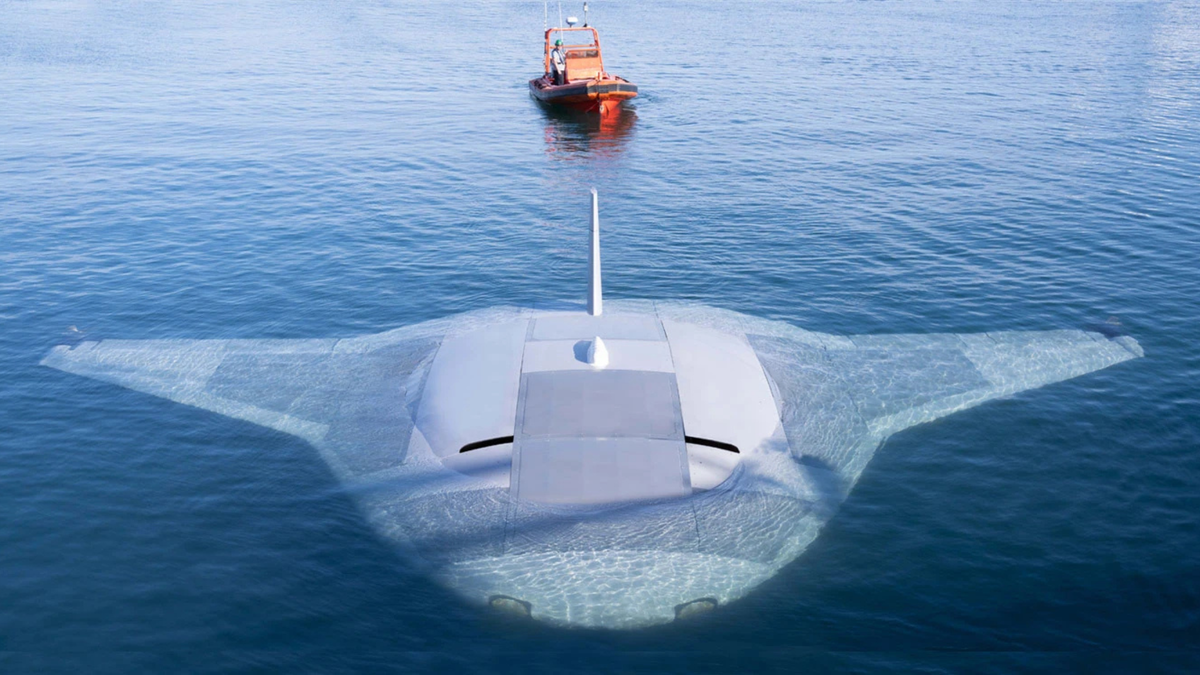
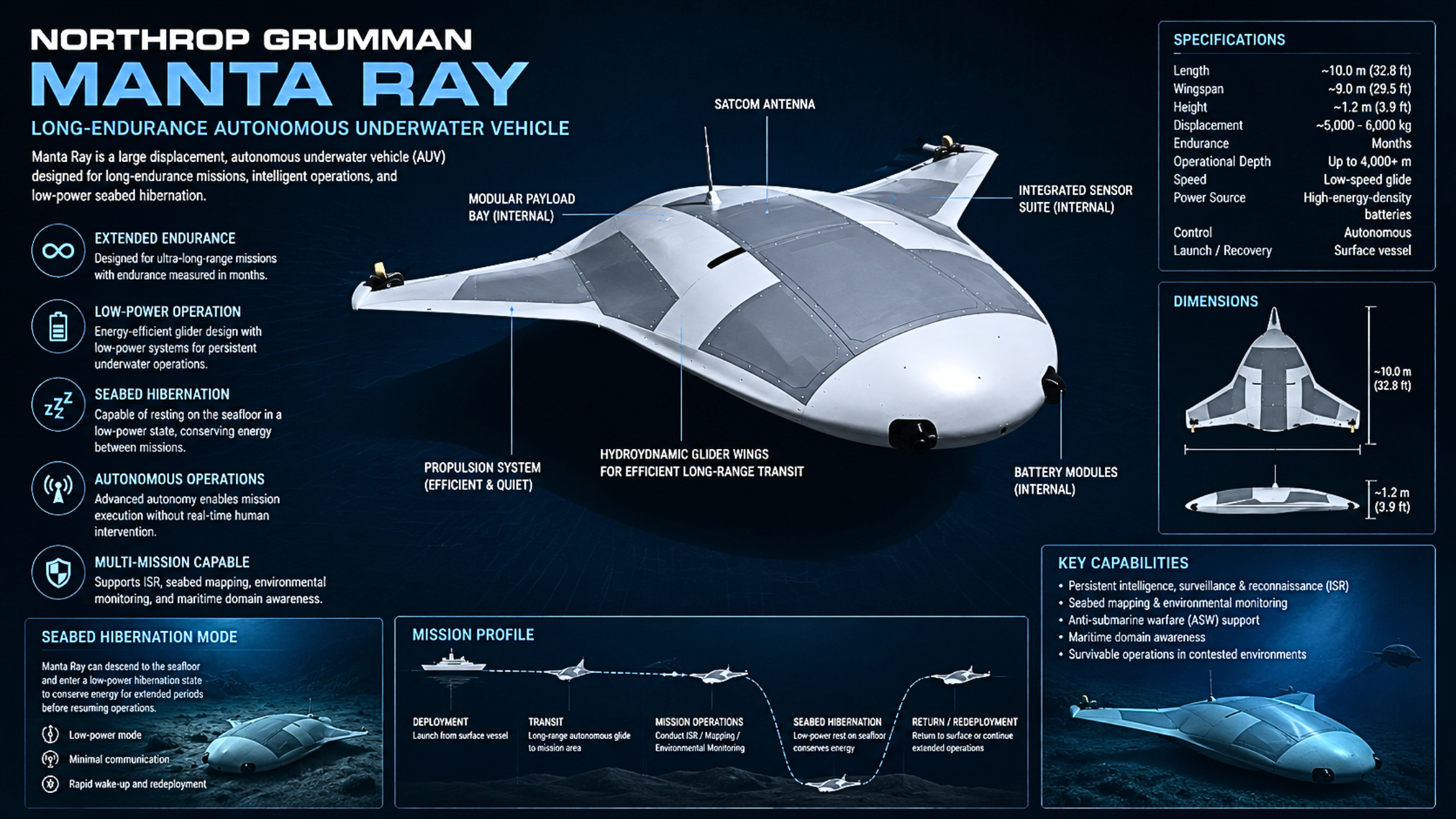
Northrop Grumman's Manta Ray is an experimental uncrewed underwater vehicle (UUV) developed under the Defense Advanced Research Projects Agency (DARPA) to demonstrate long-duration autonomous operations beneath the ocean surface. Inspired by the movement and efficiency of the marine manta ray, the vehicle is designed to travel thousands of miles while consuming minimal energy, enabling persistent undersea missions without requiring a support ship nearby.
Unlike conventional submarines or remotely operated underwater vehicles, Manta Ray is intended to operate independently for extended periods, making it suitable for missions in remote and contested maritime environments.
Built for Long-Endurance Missions
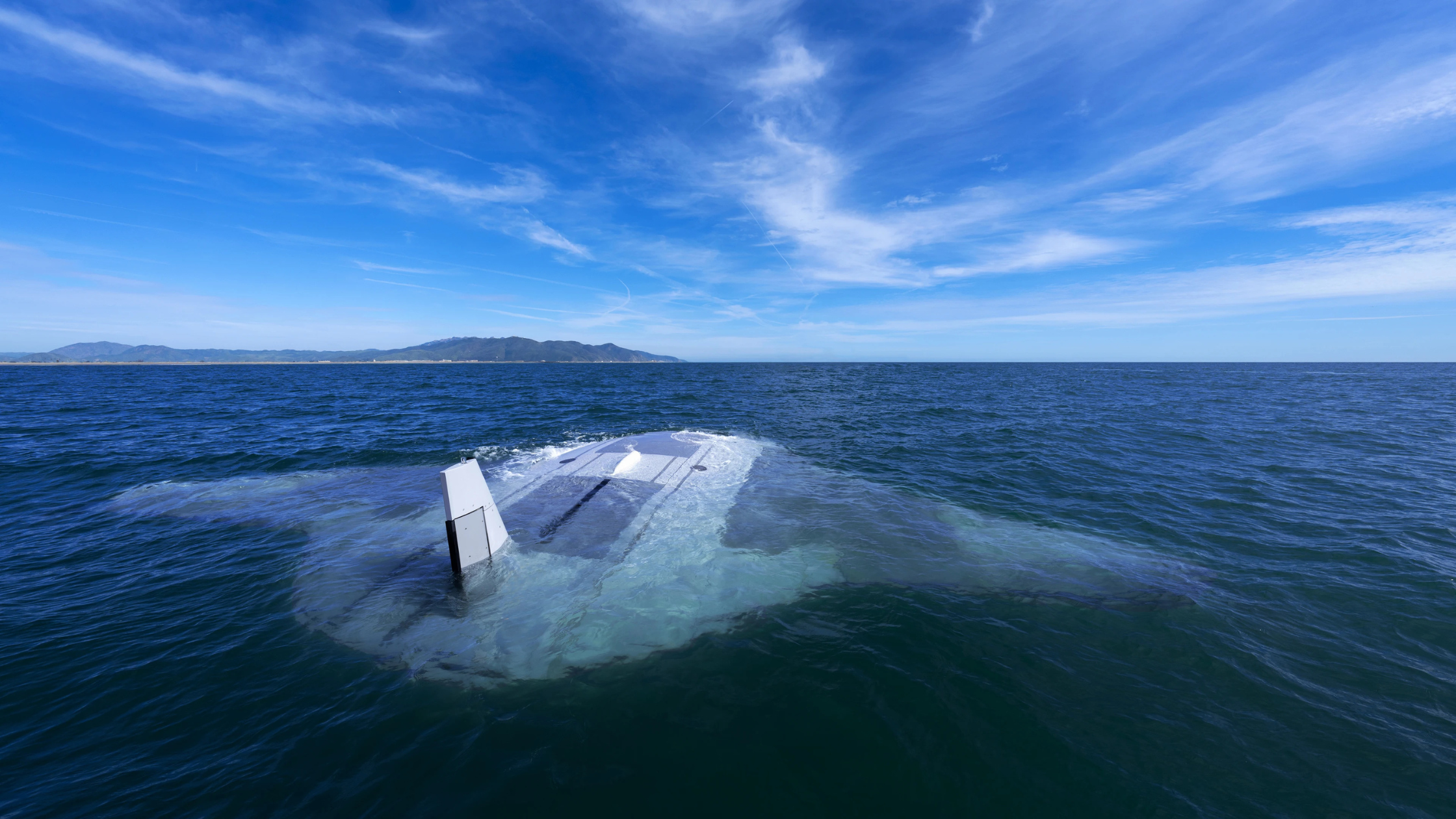
One of the Manta Ray's most distinctive features is its glider-style hydrodynamic design, which allows it to move efficiently through the water while minimizing power consumption. The platform is engineered for months-long deployments and can travel vast distances without constant human supervision.
Another innovative capability is its low-power seabed hibernation mode. When not actively conducting missions, the vehicle can settle on the ocean floor, significantly reducing energy usage before resuming operations when required. This capability could greatly extend operational endurance compared to traditional underwater platforms.
Supporting Intelligence and Maritime Security
The Manta Ray is designed to support a wide range of naval missions, including intelligence, surveillance, reconnaissance (ISR), environmental monitoring, seabed mapping, and maritime domain awareness. Its autonomous operation allows military commanders to gather information in areas that may be difficult or risky for crewed submarines.
Because it can remain underwater for extended periods with minimal logistical support, the vehicle offers a cost-effective way to monitor critical sea lanes, protect undersea infrastructure, and enhance situational awareness in strategic regions.
Successful At-Sea Testing
In 2024, Northrop Grumman successfully completed in-water testing of the Manta Ray prototype after assembling the vehicle in California and transporting it in modular sections for sea trials. The demonstrations validated the vehicle's hydrodynamic performance, autonomous navigation systems, propulsion, and overall mission capabilities under realistic operating conditions.
Author: Kevin Macmellon